Watch this blog site for film reviews, whether blockbusters, box office bombs or highly obscure. Our genres will include science fiction, animation, musical, action, fantasy, drama, documentary, thriller, horror, romance, western and comedy.
Dabney Coleman, known for portraying dishonest characters with no redeeming qualities in films such as "9 to 5" and "Tootsie," has passed away. He was 92 years old.
He was born on January 3rd, 1932, in Austin, Texas, USA. Coleman attended the Virginia Military Institute and the University of Texas School of Law. After serving in the military, he embarked on a career in the entertainment industry. In 1961, Dabney landed his first acting gig in an episode of "Naked City," according to IMDb. He went on to appear in such series as "Ben Casey," "Dr. Kildare," "The Alfred Hitchcock Hour," "The Outer Limits," "Hazel," "I Dream of Jeannie," and "The Fugitive," before recurring as Leon Bessemer, Mario Thomas' neighbour and obstetrician in the first season (1966-1967) of "That Girl." Dabney took the lead role in Norman Lear's soap opera "Mary Hartman, Mary Hartman" as Merle Jeeter. He continued that role after the programme was re-titled "Forever Fernwood."
In 1980, Coleman achieved his breakthrough role as a rapacious manager who seeks sexual favours from secretaries, with Jane Fonda, Dolly Parton, and Lily Tomlin paying the price in the workplace comedy "9 to 5." The following year, Coleman would reunite with Jane Fonda in one of his rare sympathetic roles as her dentist boyfriend in the drama "On Golden Pond." In 1982, he reverted to his boorish performances asa chauvinistic TV director in "Tootsie." Dabney also played a tough computer programmer in "WarGames" anda lisping pornographer in "Dragnet." His other films include "The Trouble with Girls," "Downhill Racer," "The Towering Inferno," "North Dallas Forty," "How to Beat the High Co$t of Living," "Melvin & Howard," "Modern Problems," "Young Doctors in Love," "Cloak & Dagger," "The Muppets Take Manhattan," "Short Time," "Meet the Applegates,""The Beverly Hillbillies," "Amos & Andrew," "You've Got Mail," "Inspector Gadget," "Stuart Little," etc.
On TV, he had a memorable turn as an insensitive talk-show host on NBC's "Buffalo Bill," which ran only for 26 episodes in 1983 and 1984. Still, it attracted a devoted following over the years for Coleman's gruff portrayal. However, Coleman gave a somewhat more sanitised and humane performance in "The Slap Maxwell Story," which aired on ABC from 1987 to 1988, while retaining his sharp wit as a fedora-wearing sports journalist. Coleman also voiced Principal Prickly in the Disney animated series "Recess." He even appeared in the HBO drama "Boardwalk Empire" as a former Atlantic City power broker with a fondness for young girls.
Roger Corman, the legendary filmmaker and undisputed "king of B-movies," has passed away. He was also responsible for launching the careers of several actors and directors, such as Jack Nicholson, Martin Scorsese, Ron Howard, Francis Ford Coppola, James Cameron, Robert De Niro, and others.
Roger Corman wasn't the type to grow up dreaming of making it big in Hollywood. He was born on 5 April 1926 in Detroit, Michigan. He went to Stanford University and chose to study industrial engineering, only to discover that it was not his passion. After college, he worked at U.S. Electrical Motors for four days, ending his stint by telling his boss, "I've made a terrible mistake." Faced with an unlimited future, he chose the path of filmmaking because his brother, Gene Corman, was a working agent in the film industry.
His first job was as an errand boy in the 20th Century Fox mailroom, but then he used the GI Bill to study English literature at Oxford University for six months, followed by six months in Paris. He did a brief stint as a script reader and penned "Highway Dragnet," selling the low-budget script to Allied Artists for $4,000. However, he was dissatisfied with the movie and, believing he could do a better job as a producer, raised $12,000 to make "Monster from the Ocean Floor," directed by Wyott Ordung. Corman would also start directing with 1955's "Swamp Women." Over the next 15 years, he made over 50 movies, gaining a reputation for working fast, often making two films simultaneously to save money. For example, "The Little Shop of Horrors," which included a brief appearance by Jack Nicholson, took just two days to film on the same set as Corman's previous movie, "Bucket of Blood." It was the basis for a long-running stage musical and a 1986 film musical starring Steve Martin, Bill Murray, and John Candy.
Corman made a series of horror movies based on the works of Edgar Allan Poe, all but one of which starred Vincent Price. The first of which was "The House of Usher" in 1960, followed by "The Pit and the Pendulum," "Tales of Terror,""The Raven," "The Masque of Red Death," and "The Tomb of Ligeia." One of his films was "The Intruder." It explored racism in the American Deep South, which starred a young William Shatner and won an award at the Venice Film Festival. However, it was a box office flop and Corman's first money-losing film, causing him to remark that he'd stick to making movies that entertained rather than had a social message. He temporarily embraced the 1960s counterculture, making the biker film "The Wild Angels," starring Peter Fonda and Nancy Sinatra. The film cost $360,000 and grossed more than $25 million. His next film was "The Trip," in which Jack Nicholson was the writer and star. It predates "Easy Rider" with Peter Fonda and Dennis Hopper in the cast.
In 1970, Corman and his younger brother Gene founded New World Pictures. Together, they produced and distributed over a hundred movies under the banner. In addition to making low-budget films, he began to pick up films by prominent foreign filmmakers, Francois Truffaut, Ingmar Bergman, Akira Kurosawa, and Federico Fellini, and introduced them to American audiences. At the beginning of the 1980s, Corman sold New World Pictures and embarked on new ventures with Concorde Films and New Horizon Films, under whose banners he continued to produce movies, now alongside his wife Julie. When Corman returned to direct for his 1990 film "Frankenstein Unbound," he failed to deliver the goods, disappointing genre fans.
Several of his former protégés, including Francis Ford Coppola, Jonathan Demme, Ron Howard, and Joe Dante, thanked him for his generosity with cameo appearances in films they directed. He is also somewhat responsible for the mega-franchise known as "The Fast and the Furious," having produced a movie of the same name in 1954. Producer Neal Moritz suggested the name to Corman when he was gearing up to launch the franchise. The two of them agreed to let it happen. In 2009, he took home a Lifetime Achievement Oscar, and well into his eighties, he continued to produce films such as "Dinoshark" and "Sharktopus" for the SyFy TV channel in 2010.
His ability to find and nurture new talent is almost unparalleled, as is the sheer volume of movies he has worked on. Many of his features have achieved cult status, and few directors have managed to make popular movies on a shoestring budget.
It is with sorrow that the renowned British actor Bernard Hillhas died at the age of 79, as his family confirmed in a statement.
He was best known for his supporting roles in "Titanic" andthe two "Lord of the Rings" films.
In 1982, Hill rose to fame in his homeland with "Boys from the Blackstuff," a gritty drama about unemployed men that became a symbol of the Thatcher era. However, the roles in which audiences are most familiar with him are those in which he brings a calm authority to some of the most successful films in movie history.
In 1997, Hill was cast in James Cameron's Oscar-winning "Titanic" as the ship's captain, Edward Smith,a man consumed by his involvement in the tragedy and finally accepting his fate. Later, Hill would subsequently appear in Peter Jackson's epic "The Lord of the Rings" series as Théoden, King of Rohan, first manipulated by his advisor in "The Two Towers" before emerging as a courageous leader in "The Return of the King."
He also starred in "Gandhi," "Shirley Valentine," "A Midsummer Night's Dream," "The Scorpion King," "Valkyrie," and "ParaNorman."
Visual Effects Producer: Rodeo FX - Wassila Lmouaci
Senior Animation Supervisor: DNEG - Robyn Luckham
Animation Supervisors: DNEG - Nick Symons
and Eric Bates
Visualisation Supervisor: The Third Floor -
Nicholas Markel
Visualisation Supervisor: Digital Domain -
Scott Meadows
Film Editor - Joe Walker
Supervising Sound Editor - Richard King
Sound Designer - Dave Whitehead
Additional Sound Design - Michael Babcock,
Lee Gilmore and Randy Torres
Re-Recording Mixers - Ron Bartlett
and Doug Hemphill
Music/Synth Programming - Hans Zimmer
Composers: Additional Music - David Fleming,
Steve Mazzaro, Steven Doar and
Andrew Kawczynski
Music Supervisors - Peter Afterman,
Deric Berberabe and Alison Litton
Score Mixer - Alan Meyerson
Review
DUNE: PART TWO was the ultimate continuation of the glorious sci-fi epic that Dune fans have clamoured for in the last three years. Originally scheduled to premiere in 2023, but was delayed by a Hollywood writers' and actors' strike until 2024. We haven't seen a cinematic event as epic, majestic, and impactful since The Lord of the Rings!
Many critics hailed PART TWO as a triumph and a
landmark science-fiction film destined to go down in history as one of
the best sequels. Some even compared itto The Empire Strikes Back and The Dark Knight, which
were sequels that were much better than their predecessors and highly
regarded by
audiences. Even filmmaker Christopher Nolan (who directed the latter)
likened this movie to the former, which may be true, given that both are
timeless masterpieces and milestones of the science fiction genre.
It's also compared to another highly regarded sequel, The Two Towers, as both movies are large-scale productions featuring huge spectacles, character-driven plots, and battle scenes.
While Part Onewas only the beginning, PART TWO continues
to strengthen the narrative direction with more full-scale action. Like
the previous movie, it is also a visual delight in every sense of the
word. It excels in sound and sight, engineering, and spectacle. None of
this would be possible without Canadian director Denis
Villeneuve, who saw fit to bring Dune to the big screen when no
one else would (unless some of you prefer David Lynch's 1984 film).
However, some long-time readers were unhappy with the changes in
the second instalment, as this had also happened in its predecessor.
Then
again, a few deviations are necessary to improve the storyline. It
reintroduced a few characters, such as Feyd-Rautha, the Emperor, and
Princess Irulan, who were absent in the first instalment. There
was a lot of territory to cover in the sequel, and Villeneuve doesn't
shy away from finding the right balance between drama, breathtaking
visuals, and character development.
Once again,
Timothée Chalamet is as excellent in his career-defining role as Paul
Atreides. He gets it right this time by lending his gravitas to the
character, making him more determined and aware of what he has to do. He
has natural chemistry with Zendaya, who is just as fabulous as her
co-star and also shines in her performance as Chani. I am glad she has
more screen time in the sequel than in its predecessor,
which relegated her to Paul's visions. Her character is essentially the
same love interest, but her personality differs significantly from that
in the books and previous adaptations. The ensemble cast is terrific,
featuring returning players such as Rebecca Ferguson and Javier Bardem,
as well as newcomers like Florence Pugh and Austin Butler. Butler is
the highlight, stealing the show as the Baron's hairless,
pale-skinned, and psychopathic nephew, Feyd-Rautha. He possesses a
killer instinct and a unique dialect in the role, with the same
rock-star swagger he brought to Elvis, and doesn't wear the same winged
codpiece as Sting wore in the 1984 film version of Dune.
On
the technical side, Greig Fraser's lavish camerawork enhances
the vision of Arrakis's desert world with sweeping shots that are a
clear homage to Lawrence of Arabia.
Once again, Hans Zimmer proves what he does best, creating an
ominous, epic score with layers of ambience and rich texture. He does
this to expand upon the original, which he previously composed in 2021.
Some of my favourite moments in the film include Paul's first ride on a
sandworm, the monochromatic gladiator fight, and the final climactic
battle.
If this sequel has taught me anything, PART: TWO is
a towering work of art that fulfils the first film's promise while
adding layers and depth. It established the franchise as famous as TheLord of the Rings and
ushered in Denis Villeneuve, who was now one of the finest directors of our time.
Its ending leaves the door open for a third part of the movie, which
would adapt Frank Herbert's sequel to the original
novel, Dune Messiah, and leaves fans waiting for more. If you're new to Dune, you start with Part One. It will provide the context and understanding you need to know and enjoy the second part. I highly recommend seeing PART TWO in the cinema, preferably in IMAX, once you've seen both movies.
The first African-American to win an Oscar for Best Supporting Actor and an Emmy for his performance in the landmark TV miniseries "Roots," Louis Gossett Jr.,recently died on 29th March 2024. He was 87 years old. After a career spanning over 60 years and hundreds of films, Louis Gossett Jr. has established a legacy as an unwavering actor, a charismatic stage presence, and a trailblazing talent, setting a standard for Black actors.
Gossett was born on 27th May 1936 in Brooklyn, New York. In honour of his father, he later added Junior to his name. He began acting in school productions and debuted on Broadway at age 16 in the play "Take A Giant Step." After attending New York University on a basketball and drama scholarship, the actor befriended Hollywood great James Dean before studying acting with such luminaries as Marilyn Monroe, Martin Landau, and Steve McQueen. His Broadway success came with Sammy Davis Jr. and Sidney Poitier (who in 1964 became the first African American to win the Academy Award for Best Actor).
In the late 1960s and early 1970s, Gossett guest-starred in numerous TV shows, but his breakthrough role on the small screen was that of Fiddler in "Roots," the 1977 miniseries about the terrible atrocities of slavery. His performance would later win him an Emmy Award. Gossett would win an Oscar and a Golden Globe for Best Supporting Actor as Emil Foley, the intimidating drill instructor alongside Richard Gere and Debra Winger in the 1982 film "An Officer and a Gentleman." A few years later, after winning the Oscar, Gossett Jr. also acted opposite Dennis Quaid in "Enemy Mine" and in 1986's "Iron Eagle," the latter of which led to three more sequels and established him as the star of a bona fide franchise. His other movies include "The Deep," "Blue Chips," "Daddy's Little Girls," "Firewalker," "Jaws 3D," "The Punisher," and "Toy Soldiers."
In recent years, Gossett has appeared in television shows, such as "Boardwalk Empire,""Extant,""Madam Secretary,""ER," and "Watchmen," and played a stubborn patriarch in a remake of "The Color Purple."
About a week ago, the unforgettable character actor M. Emmet Walsh, who was best known for his roles in "Blade Runner," "Knives Out," and "My Best Friend's Wedding" and the Coen brothers' movies "Blood Simple" and "Raising Arizona" has just passed away on 19th March 2024. He was 88. I didn't think he was famous enough until I changed my mind and wrote a late obituary.
Born in 1935 in New York and raised in Vermont, Walsh first performed in a series of stage productions, which led to his Broadway debut in 1969, starring opposite Al Pacino in "Does a Tiger Wear a Necktie?" Walsh received his first uncredited film role - as an extra in "Midnight Cowboy" - and his first credited film role in "Alice's Restaurant," both of which came in 1969. After "Alice," Walsh headed for Los Angeles in 1970 to pursue film and television work. He starred opposite Barbara Streisand and Ryan O'Neal in the 1972 hit movie "What's Up Doc." His breakthrough role was when he played Dustin Hoffman's gruff probation officer in 1978's "Straight Time."
Perhaps one of his two best-known performances was that of the hard-nosed police captain Harry Bryant, who brings Harrison Ford's character out of retirement in 1982's "Blade Runner." The other was the corrupt Texas private detective in the first film from the Coen brothers, the 1984 neo-noir "Blood Simple." The other movies from his career include "Little Big Man," "The Jerk," "Serpico," "The Gambler," "Slap Shot," "Ordinary People," "Fletch," "Critters," "Raising Arizona," "Romeo + Juliet," "My Best Friend's Wedding," and "The Iron Giant," as well as numerous guest appearances on television, including "Starsky and Hutch," "Frasier," "The Twilight Zone," "The X Files," "Home Improvement," and "Adventure Time."
His most recent performance came in Rian Johnson's 2019 murder mystery comedy "Knives Out." Walsh plays Mr Proofroc as part of an ensemble cast led by Daniel Craig as Benoit Blanc.
In the far-off future, an intelligent and gifted young man named Paul Atreides has a great destiny ahead of him by travelling to the scorching desert planet Dune to secure
the fate of his family and
his people. As evil forces
collide over the planet's
exclusive supply of the
most precious resource known to existence, only those who can overcome their fear will survive.
Cast
Timothée Chalamet - Paul Atreides
Rebecca Ferguson - Lady Jessica Atreides
Oscar Issac - Duke Leto Atreides
Jason Momoa - Duncan
Idaho
Stellan Skarsgård - Baron
Vladimir Harkonnen
Stephen McKinley Henderson -
Thufir Hawat
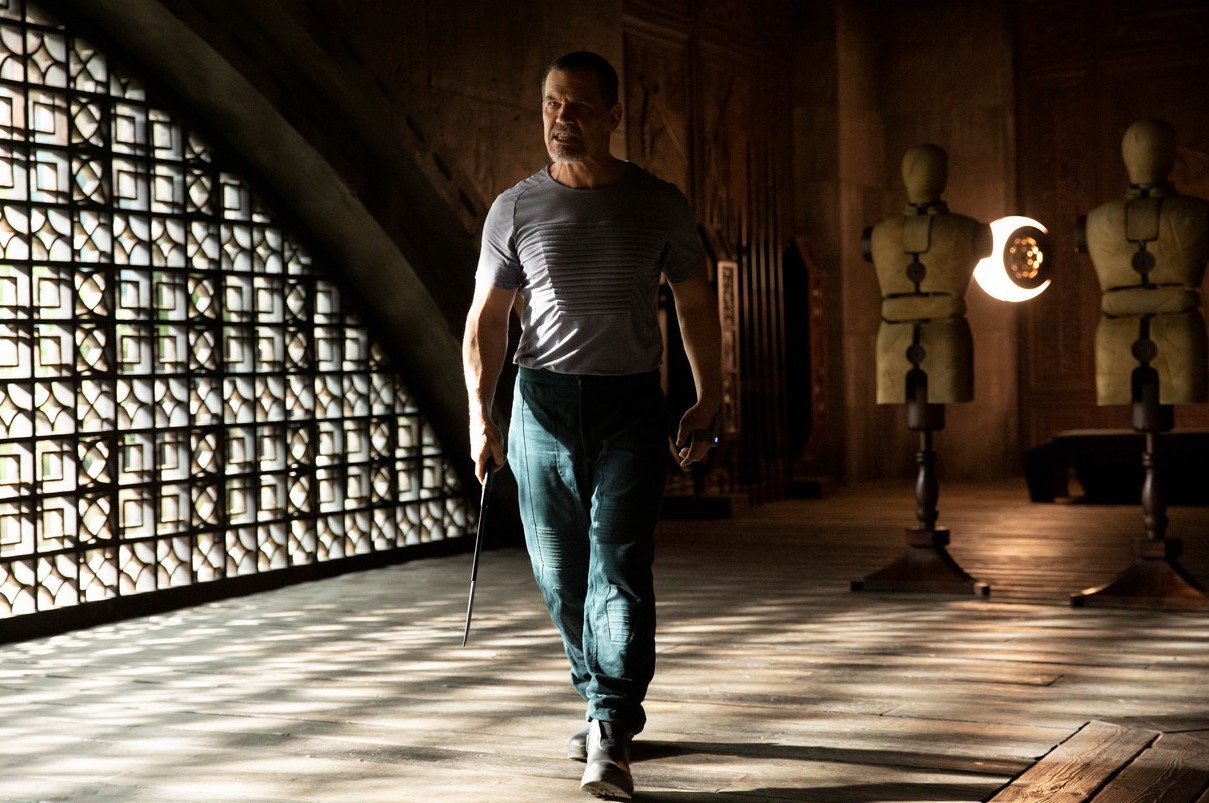
Josh Brolin - Gurney Halleck
Javier Bardem - Stilgar
Sharon Duncan-Brewster - Dr. Liet Kynes
Chang Chen - Dr. Wellington Yueh
Dave Bautista - Beast Rabban Harkonnen
David Dastmalchian - Piter de Vries
Zendaya - Chani
Charlotte Rampling - Reverend
Mother Mohiam
Babs Olusanmokun - Jamis
Benjamin Clémentine - Herald
of the Charge
Souad Faress - Bene Gesserit Sister
Golda Rosheuvel - Shadout Mapes
Roger Yuan - Lieutenant Lanville
Seun Shote - Arrakeen Residency Gardener
Neil Bell - Sardaukar Bashar
Oliver Ryan - Hawat Specialist
Stephen Collins - Harkonnen Trooper
Charlie Rawes - Harkonnen Trooper
Richard Carter - Harkonnen
Trooper
Ben Dilloway - Sardaukar
Assassin
Elmi Rashid Elmi - Shamir
Tachia Newall - Tanat
Gloria Obianyo - Female Fremen
Fehinti Balogun - Male Fremen
Dora Kápolnai-Schvab - Baron Servant
Joelle - Baron Servant (Cameo)
Jimmy Walker - Atreides Lieutenant
Paul Bullion - Sardaukar Soldier
Milena Sidorova - Human Spider Proxy
János Timkó - Harkonnen Guard
Jean Gilpin - Bene Gesserit
Ancestors (Voice)
Marianne Faithfull - Bene
Gesserit Ancestors (Voice)
Ellen Dubin - Bene Gesserit
Ancestors (Voice)
Crew
Screenplay/Director - Denis Villeneuve
Based on the Novel - Frank Herbert
Screenplay/Executive
Producer - Jon Spaihts
Screenplay - Eric Roth
Script Supervisor - Jessica Clothier
Special Consultant - Kevin J.
Anderson
Executive Producers -
Joshua Grode, John Harrison,
Herbert W. Gains, Brian & Kim
Herbert, Tanya Lapointe, Bryon
Merritt, Richard P. Rubinstein
and Thomas Tull
Producers - Cale Boyter and
Mary Parent
Producer/Unit Production
Manager - Joseph M. Carraciolo Jr.
Co-Producer/First Assistant Director - Chris Carreras
Concept Artists - Kamen Anev, Joseph Cross, Jeremy Hanna, George Hull, Eric Hamel, Carlos Haunte, Yanick Dusseault, Peter Popken and Colie Wertz
Concept Artist/Visual Effects
Art Director: Rodeo FX -
Deak Ferrand
Supervising Art Director - Tom
Brown
Set Decorators - Richard
Roberts and Zsuzsanna Sipos
Property Master - Doug Harlocker
Costume Designers - Bob
Morgan and Jacqueline West
Makeup Department Head/Makeup and Hair Designer - Donald Mowat
Prosthetic Designer: Baron Harkonnen - Love Larson
Director of Photography - Greig Fraser
Directors of Photography:
Additional Photography -
Pierre Gill and Adam Arkapaw
Unit Production Manager - James Grant
Location Manager: California - Leann Emmert
First Assistant Director:
Additional Photography -
Cliff Lanning
Second Unit Director/Stunt
Coordinator - Tom Struthers
Stunt Coordinator - Dave Judge
Fight Coordinator - Roger Yuan
Aerial Coordinator - Cliff Fleming
Special Effects Supervisor - Gerd Nefzer
Visual Effects Supervisor - Paul Lambert
Visual Effects Supervisors: DNEG - Brian Connor
and Tristan Myles
Visual Effects Producers - Maricel Pagulayan
and Brice Parker
Visual Effects Producers: DNEG -
Jennifer Fairweather and Jose Maria de la Puente
Visual Effects Producer: Rodeo FX - Wassila Lmouaci
Senior Animation Supervisor: DNEG -
Robyn Luckham
Animation Supervisors: DNEG - Nick Symons
and Eric Bates
Visualisation Supervisor: The Third Floor -
Nicholas Markel
Visualisation Supervisor: Digital Domain -
Scott Meadows
Film Editor - Joe Walker
Sound Designers/Supervising Sound Editors -
Mark A. Mangini and Theo Green
Sound Designer - Dave Whitehead
Re-Recording Mixers - Ron Bartlett
and Doug Hemphill
Music/Synth Programming - Hans Zimmer
Composers: Additional Music - David Fleming,
Steve Mazzaro, Steven Doar and Andrew Kawczynski
Music Supervisors - Peter Afterman
and Alison Litton
Score Mixer - Alan Meyerson
Awards
2022 Academy Awards
Best Sound - Mac Ruth, Mark A. Mangini,
Theo Green, Doug Hemphill and Ron Bartlett (Won)
Best Achievement in Visual Effects -
Paul Lambert, Tristan Myles, Brian Connor
and Gerd Nefzer (Won)
Best Achievement in Production Design -
Patricia Vermette and Zsuzsanna Sipos (Won)
Best Achievement in Music Written for
Motion Picture (Original Score) - Hans Zimmer (Won)
Best Achievement in Film Editing - Joe Walker (Won)
Best Achievement in Cinematography -
Greig Fraser (Won)
------------------------
Best Motion Picture of the Year - Mary Parent,
Denis Villeneuve and Cale Boyter (Nominated)
Best Achievement in Makeup and Hairstyling -
Donald Mowat, Love Larson and Eva Von Bahr
(Nominated)
Best Achievement in Costume Design -
Jacqueline West and Bob Morgan (Nominated)
Best Adapted Screenplay - Jon Spaihts,
Denis Villeneuve and Eric Roth (Nominated)
Review
Before 2021, many readers and fans had long considered DUNE as one of the unfilmable science fiction novels. Numerous attempts have failed to bring DUNE to the big screen, including one by Alejandro Jodorowsky that never materialised. Even Ridley Scott came dangerously close to adapting the original sci-fi story, only to back out when he opted for Blade Runner instead. However, David Lynch directed the first film adaptation (click here) in 1984, which remained true to its weird nature but failed at the box office and was poorly received by critics. Yet, it became a cult classic in later years. Even the 2000 miniseries version suffered from poor casting and low-quality CGI, despite remaining faithful to the original novel.It finally succeeded when Denis Villeneuve, the man behind Arrival and Blade Runner 2049, fulfilled his lifelong ambition of directing a massive sci-fi epic.
While a remarkable adaptation, this film differs from the original book. It covers the first half, leaving the story incomplete and ending abruptly. The slow pacing is also a detriment to the movie. A few characters from the book are not in this film, as they will appear in the second part. Villeneuve has lived up to the vision and scope that Frank Herbert conceived for DUNE. He wasn't trying to be like David Lean, Stanley Kubrick, or Steven Spielberg. Instead, he was doing his own thing and proved he was the best man to bring DUNE to life, as no other director could handle the responsibility of helming it. There are epic and memorable moments that make DUNE an exciting film.
It boasts a sizable cast with a strong pedigree of actors who have all delivered terrific performances, particularly Timothée Chalamet and Rebecca Ferguson. Stellan Skarsgård appears to have gained weight (due to the makeup and fat suit) to play the sinister Baron Harkonnen. His performance is better than Kenneth McMillan's in the original film because it is more creepy and less over-the-top. Zendaya could have had more scenes as Chani. She has less screen time than any of the other actors.
The costume design is impressive, and the visual effects are stunning. Even the cinematography by Greig Fraser is awe-inspiring, thanks to the breathtaking imagery that captures the movie's scale. Hans Zimmer retains his crown as one of the greatest movie composers by delivering a powerful, booming score. It helps that he was a fan of the book and has read it ever since, infusing his cinematic score with the rich texture.
This mind-blowing experience has left fans wanting more, but they will have to wait until the second part to find out what happens next. I can't say I loved DUNE, but it's different from the other versions I grew up watching. Overall, it is a great movie. This interpretation is for those who previously experienced the original versions in either Lynch's or the miniseries.